The same website, two very different audiences
If you sell to consumers, your website is a shop window. Thousands of people browse, a small percentage buy, and your job is to make that percentage as high as possible. Volume is the game.
If you sell to other businesses, your website works differently. Your visitors are often researchers, procurement leads, or decision-makers doing quiet due diligence before anyone picks up the phone. They rarely buy on the first visit. They rarely fill in a form at all.
That difference changes everything about how tracking should work and what it should tell you.
How B2C tracking works
 Consumer-focused tracking is built around behaviour and conversion. Tools like Google Analytics tell you how many people visited, which pages they read, where they came from and whether they bought something or bounced.
The goal is to optimise the journey. Move more people from landing page to checkout. Reduce drop-off. Improve the ad targeting. It works because the audience is large enough that patterns emerge from the numbers, and individual identity matters less than aggregate behaviour.
Cookies, pixels and session tracking power most of this. They are blunt instruments, but effective ones when you have enough traffic to work with.
Why that model falls short for B2B
B2B sales cycles are longer, involve more people and rarely end with someone clicking a buy button on the first visit. A procurement manager at a logistics company might visit your site four times over three weeks before their colleague sends an enquiry. Standard analytics will show you four sessions. It will not tell you they were all from the same company, or that the company is a strong fit for what you sell.
The other problem is volume. A B2B website might receive a few hundred relevant visitors a month. Aggregate data tells you almost nothing useful at that scale. What matters is knowing who those visitors are, not just that they existed.
What B2B tracking actually does
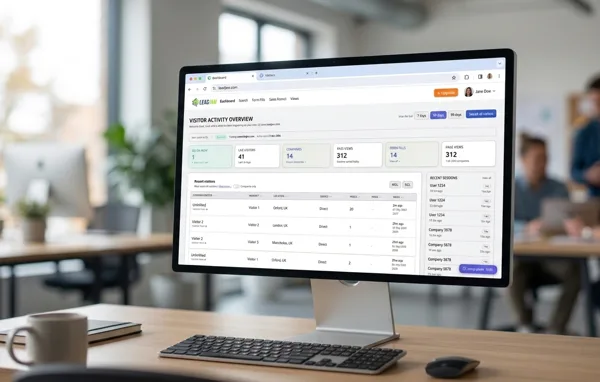
B2B tracking works at the company level rather than the individual level. When a business employee visits your site from their corporate network, their connection carries a registered IP address that can be matched back to their employer.
This means you can see that a specific company visited your pricing page twice this week, read your case studies and came back via a Google search for your brand name. That is a very different signal from an anonymous session in a dashboard.
Good B2B tracking layers on company enrichment too. Industry, size, location and more, so you can quickly tell whether a visiting company fits your ideal customer profile before you decide how to act on it.
Turning insight into action: email alerts
One of the most practical features in a B2B tracking tool is the ability to set up alerts based on the companies visiting your site.
With LeadJaw, you can create rules that notify you by email the moment a company that matches your criteria lands on a key page. A manufacturing firm visiting your integrations page. A company you have been trying to reach checking out your pricing. A return visitor from a prospect you have not heard from in weeks.
Instead of logging into a dashboard every morning and sifting through data, the relevant signal comes to you. Your sales team gets a nudge at exactly the right moment, without any manual effort.
That kind of timely awareness is simply not possible with consumer-grade analytics tools. They were not built for it.
Choosing the right tool for your audience
If your customers are businesses, your tracking should reflect that. Consumer analytics tools will still have a place, they are useful for understanding content performance and traffic sources. But they will not tell you which companies are in research mode right now, which pages they care about, or when a prospect you have been chasing just came back to your site.
B2B tracking fills that gap. It turns anonymous traffic into named companies, and named companies into timely sales opportunities.
Want to see which businesses are on your website today?
Start a free trial of LeadJaw.

Perry Jones writes about B2B sales, marketing technology and revenue operations. He has spent over a decade working with sales teams across SaaS, professional services and managed IT, helping them build repeatable pipeline from inbound and outbound channels.